Given the cyber crime onslaught that the global business community suffered in 2025, mere compliance or a reactive mindset is just not going to cut it in 2026. Organisations must be prepared and proactive when it comes to handling cyber incidents this year. That readiness starts with well-constructed and tested Cyber Incident Response Playbooks.
In this comprehensive blog, we explain what playbooks are, why they matter, how they fit into a broader cyber incident strategy.
If you’re interested in truly mastering the skills of building effective playbooks in 2026, don’t forget to check out our NCSC Assured Incident Response Playbooks Training. We also offer a specialised Incident Response Playbook Creation and Review service if you’re looking for a bespoke Playbook that is optimised to your business context and structure.
What You’ll Learn in This Guide to Incident Response Playbooks 2026
- What are Incident Response Playbooks?
- Why do you need Incident Response Playbooks in 2026?
- Playbooks vs Plans vs SOPs
- Key elements of a strong playbook
- CM-Alliance’s NCSC Assured Training in Incident Response Playbooks
- How CM-Alliance’s training elevates your cyber resilience capability
- Why should you Test your Incident Response Playbooks with Cyber Drills
- FAQs for practitioners
What Are Cyber Incident Response Playbooks?
At their core, incident response playbooks are structured, step-by-step guides that help organisations respond to and manage specific types of cyber incidents. They bridge the gap between high-level policy and task-level actions. At this point, it’s important to understand the difference between a Cyber Incident Response Plan and Playbook.
An Incident Response (IR) Plan is a high-level, organisation-wide framework. It defines governance, roles, escalation paths, and overall response principles for all cyber incidents.
An Incident Response Playbook, on the other hand, is a scenario-specific, step-by-step guide. It tells teams exactly what actions to take during a particular type of incident (e.g. ransomware, data breach).
In short, the IR plan sets the strategy and structure. Playbooks, on the other hand, operationalise that strategy into executable actions under pressure.
Unlike generic policies or strategy documents, playbooks define:
- Triggers: What event starts the playbook activation
- Roles & responsibilities: Who does what, when, and how
- Decision points: When to escalate, notify, or pivot
- Action steps: What to do (and in what order)
- Communication procedures: Internal and external messaging
- Post-incident activities: Lessons learned, reporting, and review
These elements turn chaos into order during the Golden Hour of a cyber incident, often the most decisive period of impact containment.
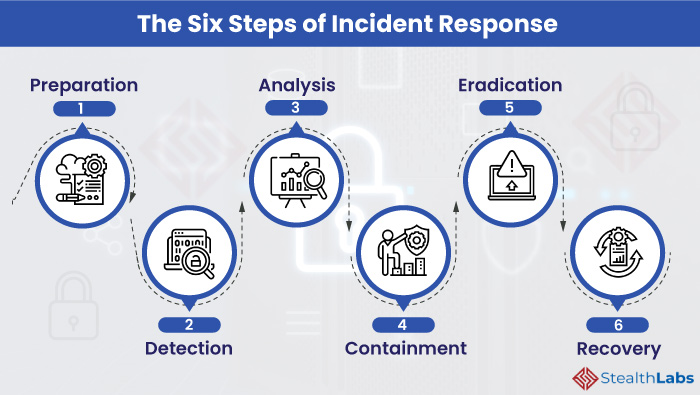
Why Incident Response Playbooks Are Essential for Your Business in 2026?
1. Speed and Consistency in Response
In a crisis, teams under stress can overlook critical actions. Playbooks codify “muscle memory”. They tell responders what to do in which circumstances. As a result, they don’t have to improvise in the midst of a crisis. This ensures that the response to any incident is swift and consistent with the overall organisational cybersecurity policy and response strategy.
- Clear Accountability
A playbook defines who is responsible for each task. It clearly outlines the responsibilities of IT, Legal, PR, and executive teams. During an incident, therefore, there is no scope for confusion and for blame games. Effective playbooks clarify accountability clearly.
3. Better Compliance & Reporting
Playbooks are a critical component of any robust organisational security and compliance framework. With their structured approach, they ensure that all necessary steps, from initial incident detection and containment to forensic investigation and official reporting, are followed without omission or delay.
A well-rehearsed playbook provides the practical framework for incident response teams to act decisively and stay compliant with applicable regulatory requirements.
4. Improved Operational Readiness
Effective crisis management hinges on preparation, and a core component of this is the regular practice of response procedures. Teams that routinely test their playbooks with tabletop exercises dramatically enhance their operational efficiency. There is a demonstrable reduction in critical discovery times and a narrowing of incident response windows. This consistent engagement ensures that all members are familiar with their roles, decision hierarchies, and the precise steps required to contain and remediate an event.
Cyber Tabletop Exercises are immersive, discussion-based simulations that walk key stakeholders through realistic, high-impact cyber incident scenarios. They test the validity, clarity, and completeness of the playbooks in a low-risk environment. The combination of structured playbook utilisation and tabletop testing provides the highest level of preparedness for navigating complex and unpredictable incidents.