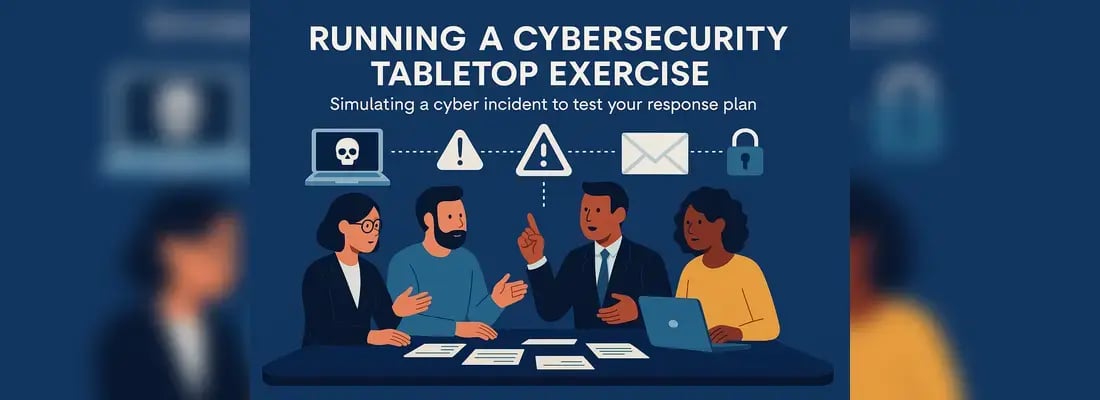
Cyber incidents in 2026 will definitely not be purely technical failures. Given the nature of attacks we saw in 2025, it’s very reasonable to expect cyber crises to turn into full-blown enterprise-wide crises. They will involve executives, legal teams, regulators, communications, suppliers, and customers, often simultaneously. As a result, a singular, generic approach to cyber incident readiness may no longer be adequate and the same applies to cyber tabletop exercises.
In order to be fully ready to handle a cyber attack in 2026, it’s imperative that you conduct role-specific, outcome-driven tabletop simulations that reflect how different stakeholders experience and respond to a cyber crisis.
At Cyber Management Alliance, our Cyber Tabletop Exercises are designed in distinct formats. Each type of cyber drill is aligned to a specific organisational objective. From operational resilience, executive decision-making, technical containment to senior-leader awareness, we have a cyber drill for every business resilience goal.
The sections below explain each exercise type, followed by a detailed comparison table that differentiates between the tabletop exercises we offer. This detailed guide should help you understand which cyber drill would be right for your organisation in 2026.
Why Different Cyber Tabletop Exercise Types Matter in 2026
Modern cyber incidents typically involve:
- Ransomware with regulatory notification deadlines
- SaaS and identity-based attacks with limited technical visibility
- Supply-chain compromises and third-party risk escalation
- Executive-level decisions made under legal, reputational, and financial pressure
Because each role experiences the crisis differently, effective preparation requires different simulations for different audiences. A one-size-fits-all tabletop may no longer be sufficient as the global cyber threat landscape becomes more and more complex.
At Cyber Management Alliance, we have curated different types of cyber tabletop exercises that cater to distinct needs of the organisation. These include:
1. Operational Tabletop Exercises
2. Cyber Tabletop Exercises for Executives
3. Technical Tabletop Exercises
4. Executive Briefing & Awareness Session
5. Executive Cyber Crisis Awareness Session
Detailed Comparison: Cyber Tabletop Exercises Offered by Cyber Management Alliance
The table below is the core reference point for understanding the differences between each TTX type we deliver.
| Tabletop Exercise Type | Primary Audience | Primary Objective | Focus Areas | Typical Duration | Level of Technical Detail | Decision-Making Emphasis | Best Used When |
| Operational Cyber Tabletop Exercise | Incident response team, IT, security, legal, HR, comms, operations | Test real-world incident response execution | Roles & responsibilities, escalation paths, cross-team coordination, playbook validation | 3–4 hours | Medium | Operational decisions and coordination | You want to validate your cyber incident response plan end-to-end under realistic pressure |
| Executive Cyber Tabletop Exercise | Board members, C-suite, senior leadership | Strengthen executive decision-making during cyber crises | Risk appetite, business continuity, regulatory exposure, ransom decisions, stakeholder impact | 2–3 hours | Low | Strategic and business-critical decisions | Executives need hands-on experience leading a cyber crisis, not just observing one |
| Technical Cyber Tabletop Exercise | SOC, IT security, infrastructure, cloud, identity teams | Test technical detection, containment, and recovery capability | Lateral movement, identity compromise, backups, tooling gaps, response sequencing | 3–4 hours | High | Technical response prioritisation | You want to stress-test your technical controls and response capability without live disruption |
| Executive Briefing & Awareness Session | Board, non-technical executives, senior management | Build foundational understanding of cyber risk and response | Threat landscape, incident lifecycle, executive roles, regulatory expectations | 60–90 minutes | Very Low | Awareness, not decision-making | Executives are new to cyber risk or require baseline understanding before deeper exercises |
| Executive Cyber Crisis Awareness Session | Board, CEO, CFO, General Counsel, Comms leaders | Prepare leaders psychologically and strategically for crisis conditions | Crisis dynamics, decision fatigue, information ambiguity, leadership under pressure | 90–120 minutes | Very Low | Behavioural and leadership decisions | Leaders need to understand what a cyber crisis feels like before facing a real one |
If your organisation is asking “Which cyber tabletop exercise do we need?”, the real question is: Who needs to be better prepared and for what kind of decision?
How Organisations Typically Use These TTXs Together
In 2026, high-performing organisations rarely rely on just one format. A common maturity-driven approach looks like:
- Executive Briefing & Awareness Session (Foundation)
This session establishes a shared baseline understanding of cyber risk across senior leadership. It focuses on enabling senior leadership to enhance their understanding of the current threat landscape, regulatory exposure, and business impact. It aligns executives on why cyber resilience matters before moving into scenario-based decision-making. - Executive Cyber Crisis Awareness Session (Leadership Readiness)
Designed to prepare leaders for their individual roles during a live cyber crisis, this session focuses on executive decision-making. Rehearsing how to make critical calls under pressure, understanding accountability and sharpening communication dynamics are the focus of this session. It helps leadership understand what will be expected of them in the first critical hours of a major incident. - Technical Cyber Tabletop Exercise (Capability Testing)
Focused on hands-on technical response, this tabletop tests detection, containment, eradication, and recovery capabilities. As the name suggests, it’s an assessment of the organisation’s technical resilience capabilities. - Executive Cyber Tabletop Exercise (Strategic Decision Rehearsal)
This is the highest-maturity exercise, placing executives in a realistic cyber crisis where strategic decisions must be made with incomplete information. It tests risk appetite and regulatory judgement. This drill is also the best way to catalyse board-level decision-making under time pressure.
Why Choose Cyber Management Alliance for your Tabletop Exercises
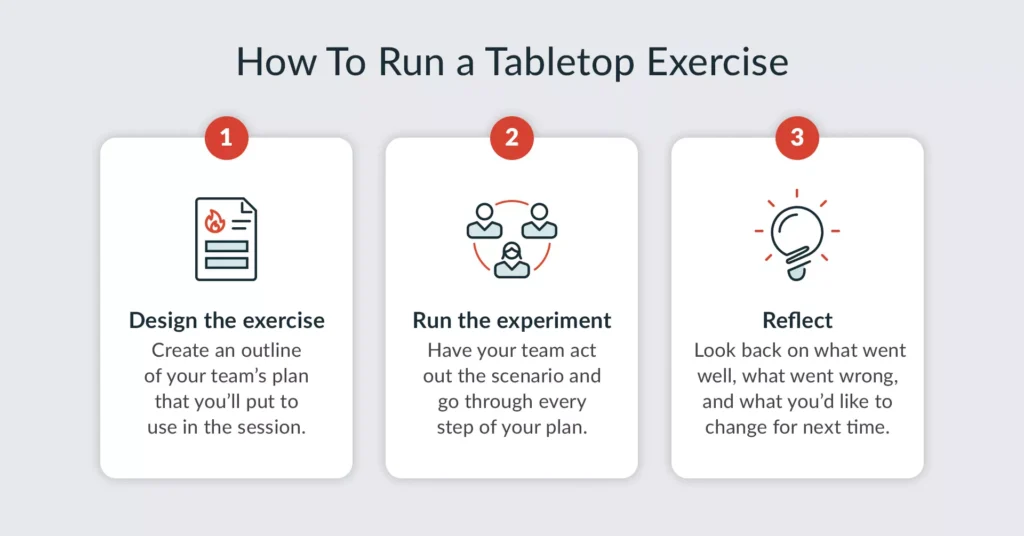
Cyber Management Alliance does not run generic tabletop scenarios. Every cyber drill planned, produced and conducted by our globally-renowned expert facilitators is:
- Tailored to your organisational threat context
- Based on relevant, real-world incidents and current attack behaviour trends
- Mapped to your industry, threat profile, and regulatory obligations
- Expert-facilitated to challenge assumptions, not validate comfort
- Outcome-focused, with clear insights on gaps, risks, and improvements
Most importantly, our exercises are designed to reflect the real emotional, operational, and leadership pressures organisations face during live cyber crises. The simulations are highly realistic to accurately embody the sense of crisis that is created during a real cyber incident. By employing a mix of different types of cyber tabletop exercises, you can ensure that you give your organisation a comprehensive advantage when it comes to building cyber resilience.